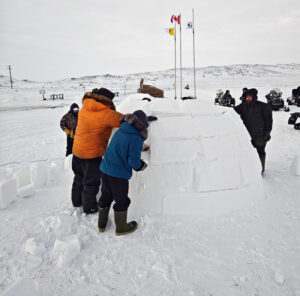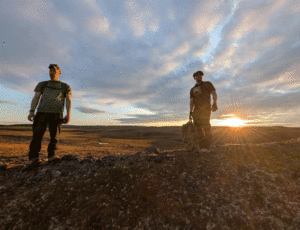

There are still people alive today who have never heard the name of Jesus.
So why would we spend years training before going to them? Nobody questions training a pilot before handing over the controls of an airplane. Nobody questions training a surgeon before handing over a scalpel. So why do some question training missionaries before sending them to the world’s unreached people groups?
Training wheels, training exercises and on-the-job training — we understand the word, but what does training really mean? Training can be defined as the process of learning the skills or knowledge needed to perform a particular job, activity or task effectively.
The March 2026 issue of Ethnos Magazine gave you a look into how Ethnos begins to train young (or older) students how to study the Word of God, how to apply it to their lives and how to share it effectively. In other words, Ethnos360 Bible Institute is teaching to make the students proficient in their knowledge and use of God’s Word.
In this issue, though, we want to look at the next step in the process of getting prospective global workers (missionaries) ready to reach the unreached. Allow me to introduce you to Brian Coombs, the director of Ethnos360 Training Center, located on the beautiful shores of the Lake of the Ozarks in Missouri. With the exception of very few Ethnos360 global workers, all of us have spent many weeks at the centre. Let’s let Brian tell us why.
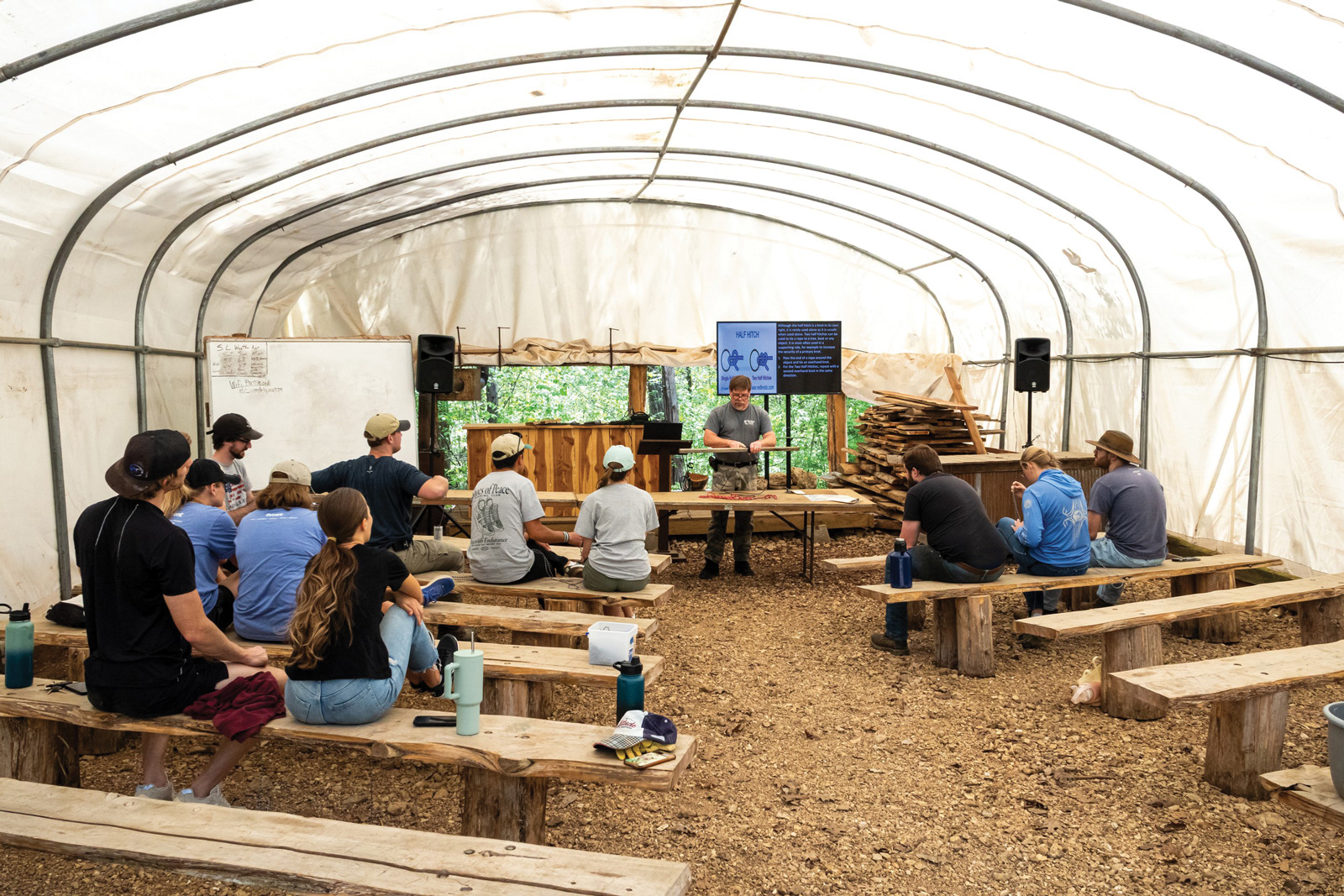
Why do some question training missionaries before sending them…?
Why ETC?
Motivated by the love of Christ and empowered by the Holy Spirit, Ethnos360 exists to assist the ministry of the local church through the mobilizing, equipping and coordinating of believers to evangelize the least reached people groups, translate the Scriptures and see indigenous churches established that glorify God.
“This is the purpose statement for Ethnos360. Here at the Ethnos360 Training Center (hereafter ETC), we exist to accomplish the equipping portion for Ethnos360. We prepare believers to share the gospel, disciple new believers and help churches become strong and able to reproduce.
“We want to help prepare every part of a candidate’s life for ministry. This training happens in the classroom, through mentoring, during outreach and in ministry practicums both on and off campus.
“Our classroom training has four main areas: Christian Living, Cross-Cultural Church Planting, Practical Skills, and Culture and Language Learning. Classes meet from 8 a.m. to noon, Monday through Friday. In the afternoons, each candidate works on a campus work detail. This keeps costs lower and helps candidates to learn new skills and to build strong work habits.
[Another integral part of the training/equipping curriculum at ETC is mentoring.] “Mentoring has two parts at ETC. The first part is personal mentoring. Each candidate has a mentor and usually meets with that mentor once a week. During this time, one of the things a candidate works through is a personal growth plan. This plan supports what they learn in class and helps them grow in godly character.
“The second part is setting up training teams. When candidates arrive, we place them on a team. This team works together in many settings. Team members have opportunities for teamwork, conflict resolution and practicing clear communication. They meet each week and plan for a practicum called Simple Living. They also serve together in our Custodial practicum. Both Simple Living and Custodial practicums give candidates real-life, hands-on teamwork experience.
“This year, we began an off-campus ministry practicum. We send students off campus, where they put many classroom principles into practice. Experienced staff go with them. These staff members give input, lead debriefs and help when needed. We are still shaping this practicum, but it will likely last two to four weeks. We thank the Lord for this open door as we train the people He has entrusted to us.
“We also offer extended training. Our Advanced Linguistics Course goes deeper than our regular program. Students learn how to create an alphabet and study the grammar and flow of an unwritten language. This course ends with a two-month practicum.
“We also offer Tech Specialist Training. This intense five-month course gives hands-on training in electrical work, solar power, water filtration and other skills. These skills help workers live and serve in remote places where people still need to hear the gospel.
“An incredible team makes this training possible. Together, our staff have more than 1,000 years of ministry experience. Everyone at ETC is involved in training our students. This includes the building and grounds team, mentors, bookkeepers and classroom teachers.
“In 2002, I visited a village in South America. Under the wing of an airplane, I met a man who had heard the gospel from missionaries. He looked me in the eyes and thanked me, through a translator, for giving my life so he could hear the gospel. I worked on maintenance at the time, but he understood that the Great Commission takes a whole team. Each person has a part to play. That is what we train for.”
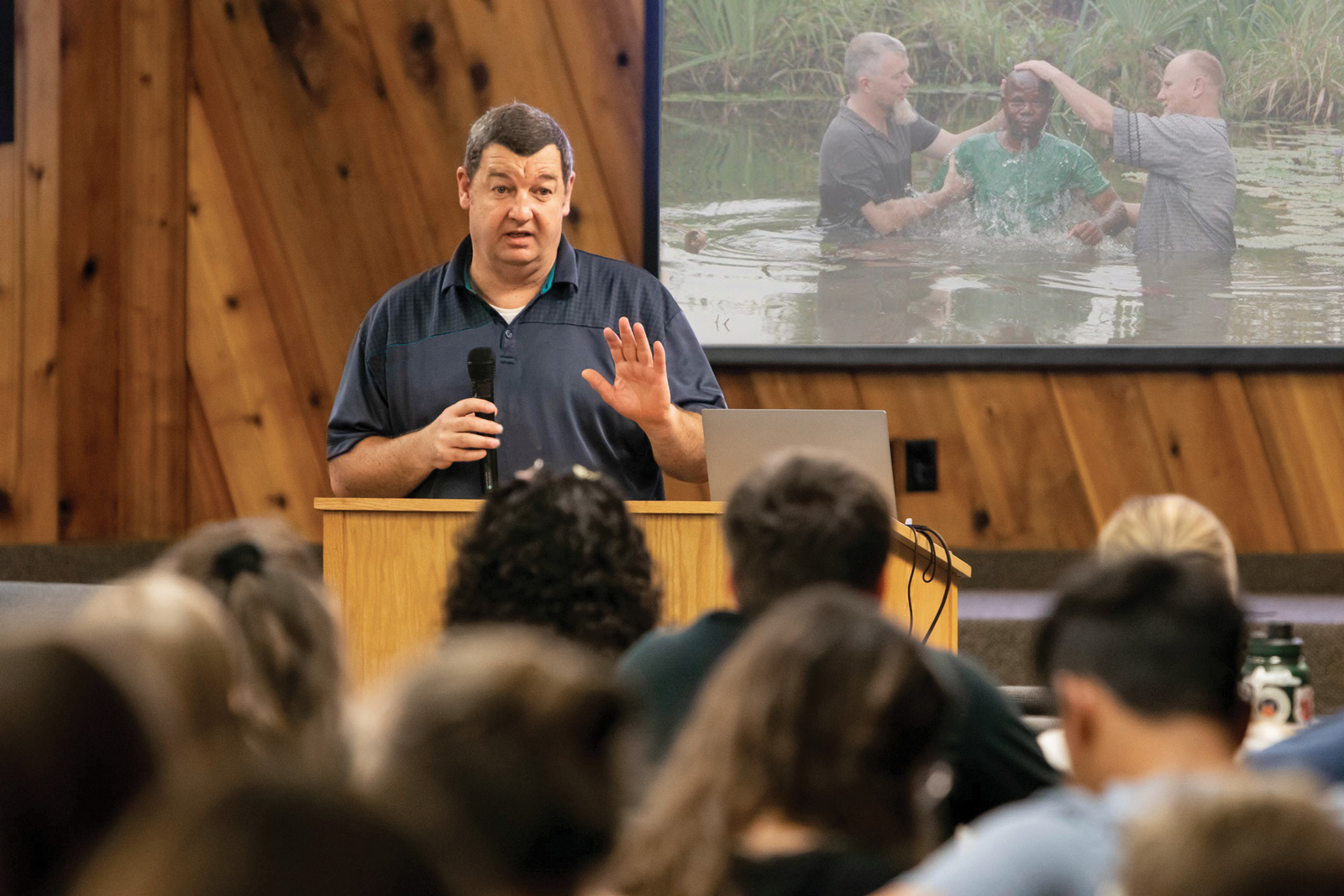
Our staff have more than 1,000 years of ministry experience.
Training in What?
So, what is actually taught or modelled at ETC? I was able to get a few of the staff to let me in on what they teach. For some of the instructors, the decision to minister at ETC came after years of on-the-field service; for others it was different factors that led them to Missouri.
Nathan and Kaylee Kelm
“When I (Nathan) was 18, my parents became associate members of New Tribes Mission (NTM) [now Ethnos360], and we spent my senior year in Bolivia. I was already moving toward full-time ministry, and God used that experience to direct me toward missions. Kaylee learned about NTM and Bolivia through a family her church supports.
“After training, we went to Bolivia with the intention of church planting in an unreached people group. However, as we finished our national culture and language study, we were redirected into the Bolivian training program, where we spent eight years teaching national believers to do cross-cultural church planting. We had the joy of sending one of our students to the people group we had hoped to work with! My main role there was teaching culture and language acquisition (CLA), [a process] which we had just spent two years putting into practice ourselves. As a couple, we mentored students toward ministry readiness.
“When God allowed chronic health issues to bring us back to the USA, the ETC was a natural fit. I continue teaching CLA as my main ministry role, as well as mentoring, serving on the leadership team and using my love of photography to provide photos of campus life. As Kaylee’s health improves, she has supported various ministries in administration, Bible study and hospitality.”
Bob and Sonya Hazen
Bob grew up in Pennsylvania, and Sonya grew up in Canada. They were both saved as children, and they had the privilege of hearing stories about church planting and support work from NTM missionaries. After high school, Bob completed missionary training with NTM in the USA while Sonya went through the training with NTM in Canada before moving stateside for the language school part of training.
“We met here in Missouri during our training and were married in 1983.
“In October 1984, we moved to Liberia, Africa, and began working in a remote people group, [but] in 1990, civil war broke out, forcing us to leave the country.
“Since there was no end in sight to the war, we moved to Ivory Coast in 1991. We were involved in a number of ministries there. In 2002, we were forced to leave the country due to civil unrest there.
“In 2003, our mission leadership asked us to be involved in the training of missionary candidates. That is what brought us to Missouri, back where we first met. We have served here since July of 2006 — so 20 years!
“Together we team teach some classes — Stewarding Time, Communication, parts of Teamwork and Practical Spirituality — and mentor students who are [in the training].
“During our years on the field, we saw how vital classes like Teamwork are. Learning how to deal with conflicts that can arise between co-workers and learning how to be a good teammate are so important to staying on the field and functioning well as a team. Practical Spirituality classes are also important not only for the mission field but for living the Christian life wherever we are.
“Learning to steward time well is also [necessary] in the life of a missionary. They must make their own schedule and decide how to divide their time between studying language, being with the people they want to reach, maintaining their home, being with their families, keeping in touch with their financial partners, and on and on.
“During our years on the field, we were involved in several different ministries. We are able to talk with students about living in an isolated village, struggling to learn the language. We have also been in different support ministries on the field, so we can share what it is like not to be right on the ‘forefront’ but to serve with joy those who are. We can definitely encourage them that no matter where they serve or what ministry they have, God is always, always faithful and keeps His promises.”
Greg and Heidi Greenlaw
“We served for 27 years in Papua New Guinea (PNG); the first 15 years were spent planting a church among the Nakui, and then we served for an additional decade supporting and shepherding [the missionary team] in the Sepik Region.
“We primarily teach in the Practical Spirituality thread. We teach topics such as teamwork, singleness, women’s roles, marriage on the field, childrearing on the field, sexual integrity and leadership/followership. Heidi and I team teach many of the classes and mentor students as well.
“We touch on these topics in view of mission field realities. Fostering a mutual understanding of these practical issues helps keep our organization’s culture more homogenous. I believe it’s because we have (and have always had) this ‘in house’ missionary training that our organization can operate with the tremendous unity Heidi and I experienced on the field. Two years of ‘onboarding’ often pays decades of dividends.
“The more technical classes equip our new missionaries with the tools they need to learn unwritten languages, create alphabets and literacy primers, translate [Scripture] and [develop] Bible lessons.
“Our 27 years in PNG fuel the content of what we teach. For 20 of those years, I served as a culture and language consultant, visiting our interior teams every six months during their early years of learning culture and language. We worked with all types of teams among all types of villages. During the decade that we served as field leaders, we witnessed firsthand what causes teams to unravel … and reconcile. In the church plant [where we served], we experienced many frustrating times and also some glorious moments. We raised six children in PNG, each of them unique in personality and malleability. When Heidi talks about child training, she speaks from broad experience and brings it to life with living examples.
“We want all aspects of our training to be focused on principles, not rules, but we mustn’t get stuck in the realm of the theoretical. The practical principles must be animated by real scenarios for them to be relatable, meaningful and memorable. That’s the reason field experience matters so much.”
Ben and Crystal Nielsen
“I (Ben) learned about NTM from a former pastor who was, himself, a former NTM missionary. After hearing about the mission and that there were unreached people groups in the world, I decided I wanted to be a missionary. I attended NTBI from January 2010 to December 2011, and that is where I met Crystal. Once Crystal and I got engaged, I no longer thought missions work was an option due to Crystal’s health problems. However, after 10 years, the Lord challenged my heart with serving in a support role here in the USA. After much prayer, we decided to step out in faith and see if the Lord would raise the support we needed. About a year later, we finished our initial ministry partnership development [building a prayer and financial support team] and arrived at ETC to begin serving.
“I serve as the volunteer coordinator, on the grounds maintenance team, and by drawing our campus maps and floor plans. Crystal serves as the assistant volunteer coordinator.
“While we have been serving at ETC, I have been able to work with the students who serve on the grounds work detail team. I have been able to teach them many skills in the realm of gardening and landscaping; however, I believe the biggest thing we teach them is how to do their work well as to the Lord.”
Does It Work?
That’s all well and good to express the desires and hopes of the staff, but is it effective? Can anyone give a clear testimony to the efficacy of the training? YES! I’m going to introduce you to a number of former students from ETC, and I think you’ll see quickly that it does work.
I was able to get in contact with Laura Joachims, ministering right now in West Africa. When asked about her choice of training agencies, she responded, “I had friends who trained with Ethnos360, and I was able to see how well prepared they were to enter the field. I knew I was called to go to the unreached, but I had no idea how to do that well. I knew I needed training, and Ethnos360 had the most extensive program I could find!”
Jimmy and Shelby Stewart are ministering with Ethnos360 Aviation, after initial training at ETC. But with his piloting skills, what made them choose ETC? Shelby said, “My husband and I have been passionate about reaching the unreached with the Good News of Jesus through aviation for years, but we weren’t sure which organization we would serve with once it was time to move in that direction. We looked at many sending organizations, all with great people involved, but we chose Ethnos360 because everything the organization does is for the purpose of seeing a mature church among unreached people groups. That really makes Ethnos360 stand out.”
How about someone who really wants to be a church planter? Why choose a two-year course when they are so eager to share the Good News quickly? Josh and Carissa Bell are ministering in West Africa. His response? “We chose ETC because of its focus on training church planters to preach the Good News among the least reached. Because of this very specific goal that we had in mind in ministry, ETC was our first choice to receive the necessary training and discipleship. No other training program that we know of provides students with this sort of training in such a robust way.”
There is a young family engaged in ministry in a creative engagement environment, so I’ll forego the husband’s name; I’ll just call him “H.” They aren’t in a “normal” location with freedoms and openness to share the gospel. Why did they choose ETC? “I chose ETC because it was the next step! Before going to EBI, I already decided that I wanted to serve with [this organization]. I knew their goal, establishing maturing churches among the unreached; I appreciated their methodology; and I was impressed by the members I had already met — not because they had magnetic personalities or larger-than-life charisma, but because they were humble and godly. Some of them had planted churches, translated Bibles or served for a lifetime in other roles — all of them had sacrificed — yet the only person they wanted to talk about was Jesus and the people He died for. So, I thought, ‘Whatever training, whatever community produced people like this, I want to be a part of that.’”
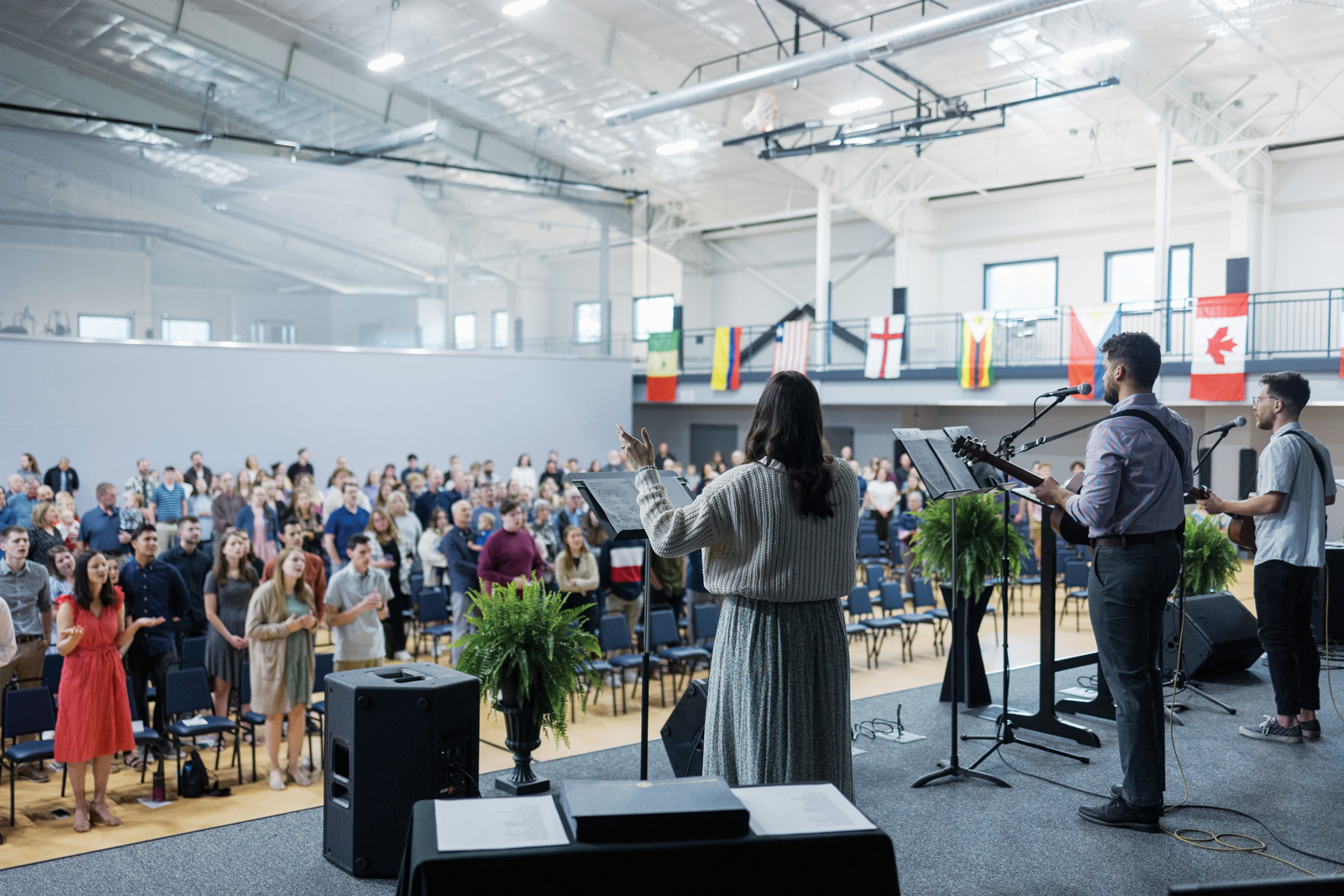
We chose Ethnos360 because everything the organization does is for the purpose of seeing a mature church among unreached people groups.
Length of Training
Remember that by definition, training involves making someone effective. When asked about their thoughts on the length of training at ETC and whether the two-year training was indeed effective, the missionaries responded in this way.
Laura said, “It’s definitely a big time commitment, and for those who are eager to get to the field quickly, it can be intimidating. I was much more focused on learning how to do the work well than how to do it quickly, so the length of the program was never an issue for me. I also developed some of my closest relationships during those years, so I cherished the full time I had in training. As with so many learning experiences, the more you learn, the more you realize [what] you don’t know! I don’t think it’s possible to have a training program that fully prepares you for everything cross-cultural ministry will require; we keep on learning our whole lives in the midst of ministry.”
I asked Gaby Gutierrez, a young lady serving in Brazil, her thoughts on the length of the training program. She was not shy in her explanation. “It was the reason why I chose it! I did feel like all the classes were necessary and helpful for helping set up expectations and teaching new skills… or even for learning to think about things I wouldn’t know how to think about. I actually left feeling that it could’ve been longer.” Thankfully, there is ongoing training for missionaries while on the field, so Gaby will keep learning!
Shelby Stewart responded with honesty and transparency: “The length of time initially intimidated and frustrated me. My husband and I had been in ministry for years, both with overseas experience, and had college degrees from Christian universities. I didn’t see the need to seemingly prolong our arrival on a foreign field when there is so much need [on the field]! However, I quickly discovered that the work Ethnos360 does is an extremely lengthy and arduous journey. Missionaries need to be well-trained and ready to endure the course. ETC’s training absolutely does that. Even as support workers, it is so important to know all the ins and outs of church planting so that we can be as involved as possible in the work. I am so thankful for all the classes we took.”
There was another responder who is now married to a pilot. Her name is Valerie Mikkelson. She said, “Though two years of training, in addition to the prior time taking Bible [classes], initially sounds like a long time, I saw those two years as an investment toward decades of ministry. Knowing that I was spending a couple of years receiving training that would increase my effectiveness and longevity in ministry for potentially the next fifty years (emphasis added by editor) felt completely worth it to me.”
And “H”? He was so logical, practical and honest in his reply. “I knew that training with [this organization] would be an investment; I counted that cost before I signed up. But the alternative was more intimidating. Moving my family halfway across the world, learning a new culture and language and having a fruitful ministry after just a short ‘crash course’ in cross-cultural ministry sounded like wishful thinking. And besides, I don’t think I was at a place of spiritual maturity at that time to uproot myself from community and grow on my own. Not that we’re ever ‘sufficient’ for what God has before us, but I’m thankful for the four years [including the two years at EBI] of the investment of others in my life before striving to invest in others by the Spirit.
“There were classes that seem to be unnecessary for our [present] context. For example, Simple Living, where we practiced living primitively as a team in the woods, didn’t seem to have application for life in a metropolis. But the lessons I learned about myself and about teamwork were invaluable. Plus, now I know how to process a whole chicken, which might come in handy soon! When I finished, I was both thankful for the entirety of training and also ready to leave! Two years does seem like a long time at first, but the pace of training allows for [two] of the most important aspects of ETC: relationships and mentoring. Relationships with peers, with mentors, with the community and with a local church take time, and that’s not something to push against.
“I’m glad I didn’t rush overseas with youthful zeal and good intentions. I know that I’m equipped and grounded to last in hostile territory and bear fruit as I depend on Christ and my teammates.”
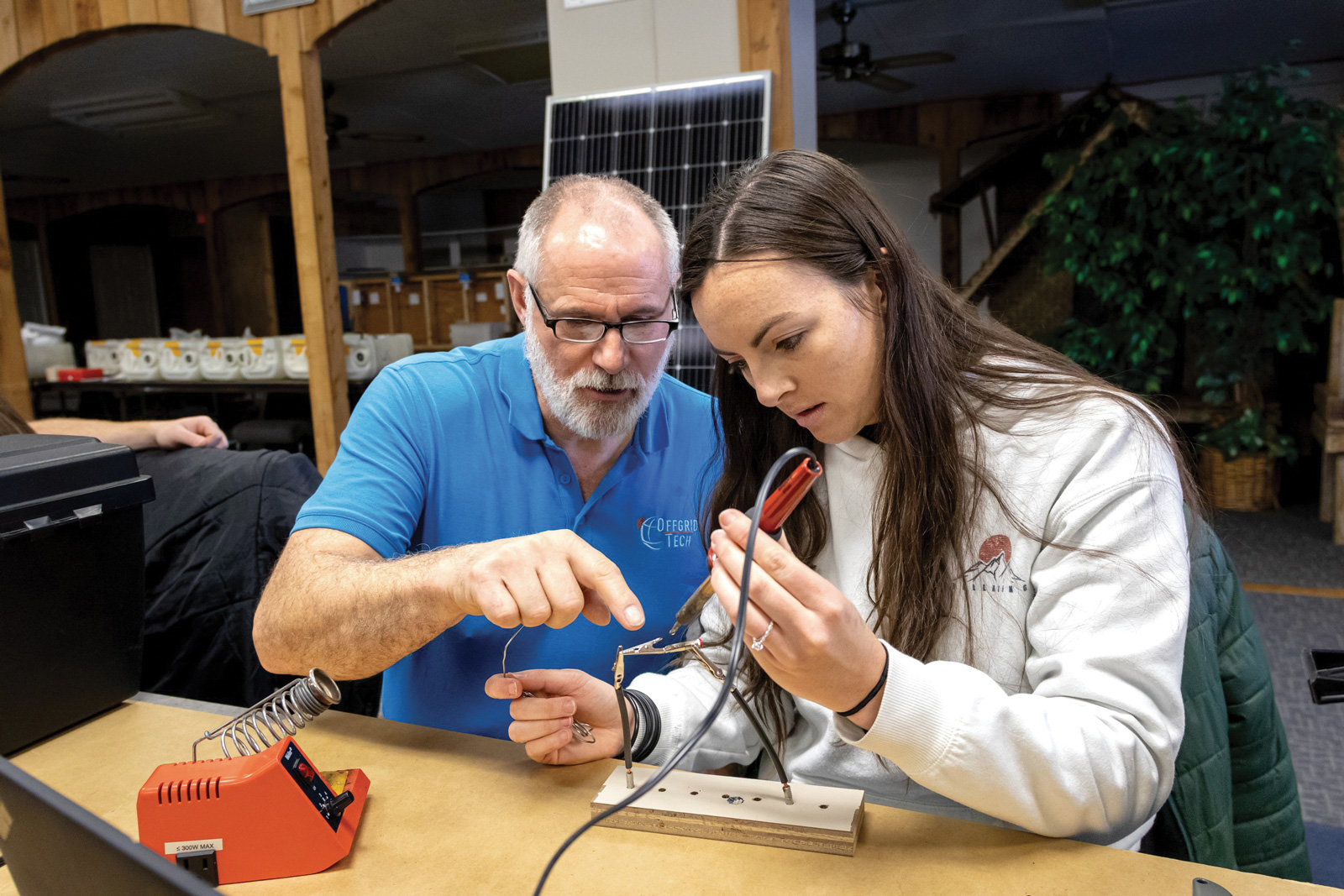
Missionaries need to be well-trained and ready to endure the course.
The Classes
The question came up about Laura’s favourite or most beneficial classes while at ETC. She commented, “I loved all of the language classes! It’s fascinating how the Lord created languages and [gave us] our ability to make so many different sounds. There are so many other things I learned in class that ‘became part of me’ which would be difficult to articulate clearly, but I know what I learned at ETC shaped me to handle the unique challenges of adapting to culture, working in teams and clearly communicating God’s Word.”
And Josh in West Africa? “Worldview was excellent. It was practical, and I have found that it reshaped the way that I analyze the world around me while also helping me better identify barriers and teach the biblical story in other contexts. The fact that it was principle based, with practical, real-world examples made it possible for me to wrap my head around the ideas and principles. These principles have guided me as I have studied a number of different worldviews.”
Valerie had slightly different favourites. “Foundational Bible Teaching (FBT): Even though I have been a Christian for years, I have struggled, at times, to see the metanarrative [the overarching theme] that runs through the Old and New Testaments. However, the FBT class gave me a front row seat to the relationship between the Testaments.
“Culture and Values: Our creative God blessed mankind with a variety of languages and cultures, and I loved getting to learn about the differences among them.
“Ministry Partnership Development: This class gave me practical tools and principles for doing the intimidating but faith-strengthening work of developing a ministry team — a vital part of ministry and a chance to pour into others who have poured so much into me.”
Shelby explained her favourites like this: “My two favourite classes were Worldview and Education and Families. The Worldview class taught me just how much I don’t know about the mind of unreached people and just how deeply rooted their beliefs are. It will take more than a simple one-time evangelism moment to change the belief system of an entire people; it takes years, decades even, to get to the roots of those beliefs.
“The Education and Families class eased a lot of my anxieties about raising a family overseas. We received great tools to care for our family emotionally and spiritually through culture differences and transitions. We also gained insight into how educating our children will look when it is time for that.”
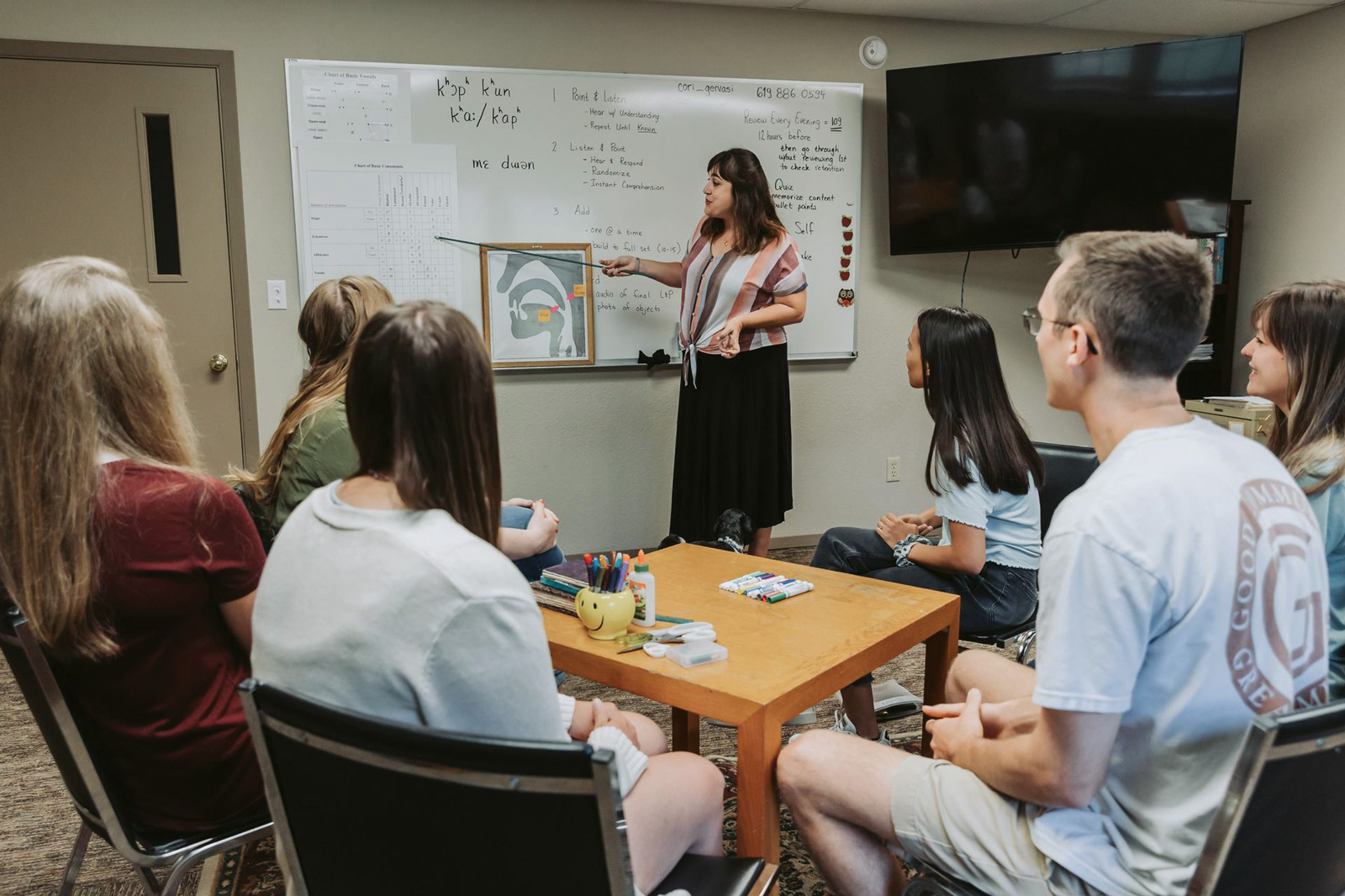
It is the Word which equips us to transform the worldviews of others. Without solid, deep roots in the story of Scripture, we have nothing to offer others.
Useful or Useless?
Think back to your days in Geometry class. What was the favourite question? “When will I ever use this in my real life?” Taking that thought to the places of ministry, are these classes useful “in real life”? Did the teaching they received “stick”?
Jimmy and Shelby were able to dip into their new knowledge before even getting to the field! They said, “While home for the summer, we were meeting with supporters, churches and friends. We were able to answer nearly every question thrown our way (or answer pre-emptively) about the work we will be involved with because of the classes and interactions with seasoned missionaries at ETC.”
Josh and Carissa are helping Africans in West Africa to be ready to go to the unreached in their own countries. Josh said, “I daily use the tools that I learned in Phonetics and Worldview. These two courses were incredibly helpful in my ability to communicate the truth of Scripture to others.”
Our friend “H” commented on that question: “Right now, I’m learning the language and culture of [this country] alongside my wife (and I guess our two kids are also learning!). We constantly find ourselves in situations or conversations that would tempt us to make assumptions. We ask questions to find the answers we’ve already decided are true, and that type of thinking can go undetected. But our courses in Culture and Worldview have equipped us to ask better questions and to adopt the attitude of a learner. I could go on about lessons in teamwork, phonetics, the local church and more!”
And in Brazil, Gaby answered, “Since I have arrived in Brazil, I have thought many times to myself, ‘Wow, everything I learned at ETC was so true and accurate.’ The things they said to prepare for happened, the methods they taught us are working for me, and they painted a good picture of what life will look like.”
Life Application
When asked about any advice that Laura would give to someone contemplating being trained at ETC, her succinct answer was, “It’s not just school; allow the Lord to really work on your heart and shape you into the person He wants you to be, no matter where He leads you.” I think that holds true for any believer at any time in their life.
Josh responded quite eloquently: “Two points of encouragement from me on this one. [First of all,] dig in and pursue real, honest conversations with your trainers at ETC. Seek friendships where you can learn from those training you. Aim to trust God to cultivate these friendships where you can sit at the feet of others and appreciate their different perspectives. [Secondly,] even if classes are about ministry, make sure that the depth of your [personal] studies in God’s Word grows deeper and deeper. It is the Word which equips us to transform the worldviews of others. Without solid, deep roots in the story of Scripture, we have nothing to offer others. We may be able to speak the language well in a culturally relevant way, but without a vibrant growing study of God’s communication to us, we have nothing valuable to communicate.”

It’s not just school; allow the Lord to really work on your heart and shape you into the person He wants you to be, no matter where He leads you.
In the Future
I have been challenged by the comments of those I interviewed. I went through the training a few years ago, but I needed to be reminded that even here in the USA, I can use what was taught to us back then to see changes in my own neighbourhood or church family.
I think that “H” said it so well in his advice to prospective ETC students. Look at his comments and apply them to your own situation, to your own “training centre” where God has you.
“Don’t get too busy. ETC is like a greenhouse, so take the time to grow. When you’re on the field, hardship and difficulty will come, but green branches don’t burn. So, take the time to grow. Know your staff and teachers. Invest in mentorship. Ask questions. Memorize Scripture. Practice your gifts. Learn from one another. And enjoy time with the Father.”
Managing Editor
Bruce Enemark was raised in Panama, the youngest of three missionary kids (MKs). He and Julie, his wife, ministered with Ethnos360 in Panama and Paraguay for 24 years before he joined Ethnos360’s Advancement Team as a writer, proofreader and now managing editor. Faith Baptist Church of Chetek, Wisconsin, is their sending church and has been behind the Enemarks since they started their ministry with Ethnos360.